

Veo Camera
Team Sports Video Analysis Tools That Deliver
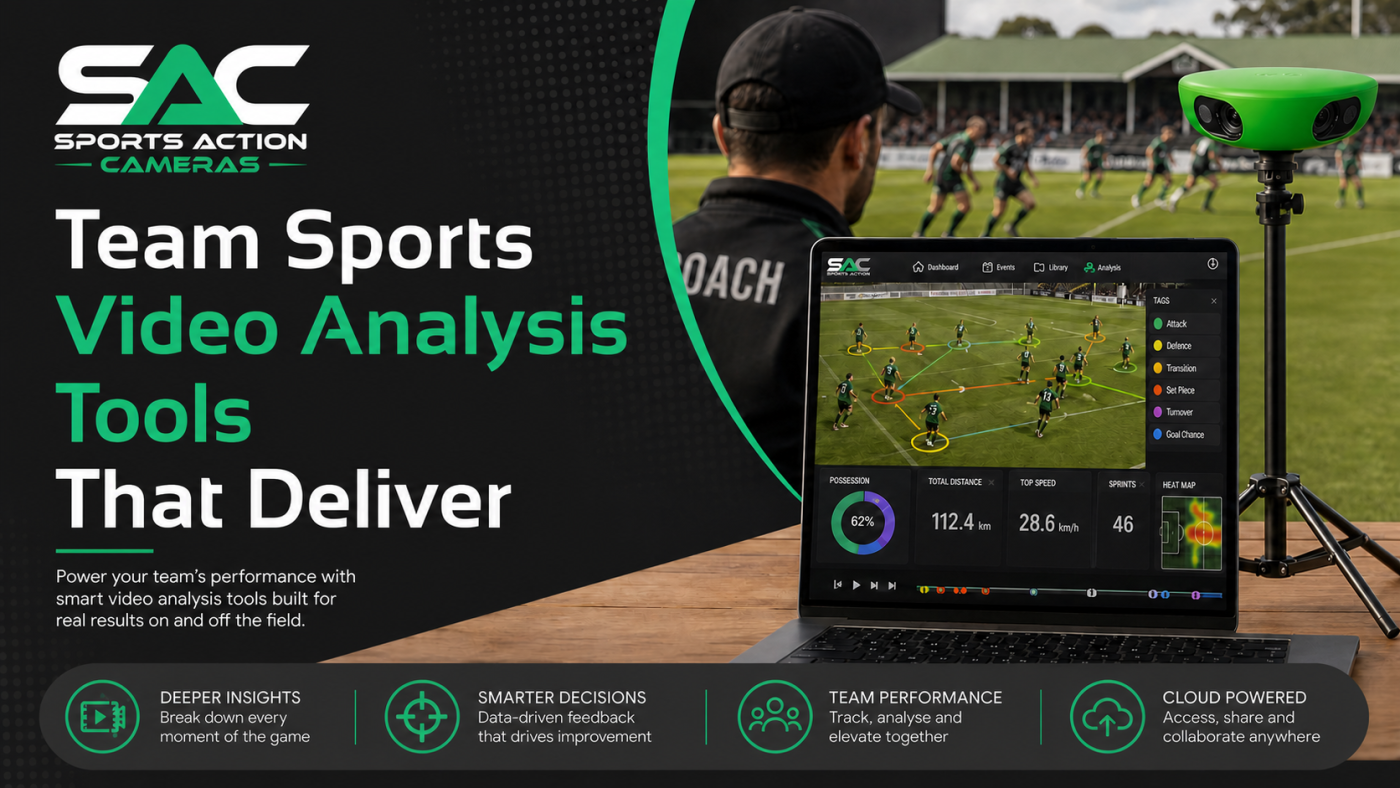
A coach should not have to choose between watching the match and capturing it. Yet that is still the reality for plenty of clubs: a parent filming from the sideline, half the play missed, a shaky frame, and footage that takes hours to find afterwards. The right team sports video analysis tools change that equation. They record the whole contest, make key moments easier to revisit, and give coaches a clearer path from game day to the next training session.
For Australian clubs, schools and performance programmes, the objective is not simply to own a camera. It is to build a reliable video process that players will actually use and coaches can fit into a busy week.
What good video analysis looks like in team sport
The most useful analysis starts with complete context. A goal, try, turnover or defensive breakdown rarely makes sense as an isolated clip. Coaches need to see the build-up: the positioning off the ball, the choices made two phases earlier, the space that was available and the communication that did or did not happen.
That is why a sports-specific, wide-angle recording setup has a major advantage over ad hoc sideline filming. It is designed to capture the full field or court from an elevated position, rather than chasing the ball. Players, formations and transitions remain visible, whether you are reviewing AFL structure, football pressing, netball movement through court, basketball spacing or rugby defensive line speed.
Useful video analysis also has to be practical. If footage is difficult to upload, impossible to share or too time-consuming to review, even excellent vision ends up sitting unused. The best systems shorten the distance between recording a game and having a productive conversation about it.
Team sports video analysis tools need to solve three jobs
When comparing options, separate the job into recording, reviewing and communicating. A solution that only handles one of these well can create more work than it removes.
Record the whole game with confidence
The camera is the foundation. Look for a setup built for outdoor sport, with a high, stable viewpoint, wide field coverage and enough battery capacity for your usual fixtures. A shaky tripod, inadequate mounting position or a camera that cannot cover the full playing area will limit every later step.
For clubs with multiple teams, reliability matters as much as image quality. Staff and volunteers need a repeatable setup that does not demand a dedicated camera operator. A purpose-built system can be deployed before warm-up, left to record the match, then packed down quickly after full-time.
Connectivity is another real-world consideration. WiFi may suit venues with dependable internet access, while 5G capability can be valuable when matches are played across grounds with variable network infrastructure. The better choice depends on where your teams compete and how quickly you need to access or share the footage.
Turn footage into a review session
Recording is only the first whistle. Analysis software should make it straightforward to replay moments, create clips, add notes and organise a match so coaches are not scrubbing through 90 minutes of video looking for one passage of play.
AI-assisted tracking and automated production can reduce the manual workload significantly. Rather than relying on someone to pan and zoom throughout a game, the platform can create a view that follows the action while retaining access to the wider tactical picture. That gives coaches a cleaner starting point for review and makes footage more watchable for players and families.
Do not expect automation to replace coaching judgement. AI can identify movement and help organise vision, but it cannot decide whether a player ignored a better option, whether a defensive shape suited the opposition, or whether a tactical adjustment should carry into next week. The value comes from combining faster footage handling with informed coaching.
Get the message to players
A hard drive full of matches does not improve a team. Improvement happens when a player sees a specific moment, understands the coaching point and can apply it at training.
Choose a platform that supports easy sharing of games and clips with the people who need them. Coaches may want to prepare a short unit review for defenders, mids or attackers. Players may benefit from individual clips tied to a development target. Schools and clubs may also want match highlights that support participation, recognition and community engagement.
Keep the delivery focused. A three-minute clip with one clear message can be more effective than a 40-minute meeting where players lose concentration. Video should sharpen the coaching conversation, not bury it in information.
The buying decision: camera, platform and accessories
A common mistake is comparing camera prices without considering the complete operating setup. Team sports video analysis tools usually involve hardware, a subscription platform and the practical accessories needed to use the system safely and consistently.
The subscription is not an optional afterthought. It typically enables the cloud-based recording workflow, analysis features, sharing tools and, where available, livestreaming functions. Build this ongoing cost into the club budget from the start, alongside the purchase of the camera itself.
Accessories matter more than they appear on a product page. A quality carbon fibre tripod helps secure an elevated, stable view without adding unnecessary weight on away days. A fitted case or bag protects equipment between fixtures. Suitable mounts can make a major difference at venues where the ideal recording position is not obvious. These are the items that keep a good camera system working through a full season.
For decision-makers, the right question is not, “What is the cheapest camera?” It is, “What will our coaches reliably use every weekend?” A lower upfront price can be false economy if the system is awkward to transport, unreliable at your grounds or unsupported when something goes wrong.
Build a workflow your club can sustain
The strongest video programmes are usually the simplest ones. Start by assigning clear responsibility for setup, pack-down and access to footage. That responsibility does not need to sit with the head coach, but it should not be vague.
Before the season begins, test the setup at your home venue. Check the sightline from the tripod position, confirm the full ground or court fits in frame, and assess any risks from weather, stray balls or foot traffic. Run through charging, storage, connectivity and uploading so the first competitive fixture is not also a technical trial.
Then decide how video fits into your weekly rhythm. For example, coaches might review the match within 48 hours, prepare a small number of clips around two team priorities, then show those clips before the relevant training block. Players can return to the footage afterwards, but the live coaching session stays purposeful.
It also pays to set basic rules around access and privacy, particularly for junior teams and school sport. Clarify who can view, download and share vision. Keep player welfare and consent central to the process, rather than treating video as content for content’s sake.
Where the return on investment shows up
The first benefit is better feedback. Coaches can move from “I think we lost shape there” to showing the exact moment and inviting players to assess it. This makes feedback more objective and gives visual learners something concrete to take away.
The second is player development. Young athletes can see habits that are difficult to feel during a fast contest: running lines, body position, recovery effort, defensive scanning and decision-making under pressure. That is valuable across every level, from grassroots teams building fundamentals to competitive programmes refining details.
There is also a broader club benefit. Livestreaming and highlight creation can help engage families, supporters and prospective players, while recorded games create a valuable archive of seasons, finals campaigns and player progress. These extras should not outweigh the coaching case, but they can strengthen the business case for a club committee or school budget holder.
Choosing a local sports video partner
Equipment is only useful when it arrives on time, works as expected and has a clear support path behind it. For Australian organisations, local stock and local advice can remove much of the uncertainty attached to sports technology purchases.
Sports Action Cameras Australia supports clubs and schools with Veo Cam 3 hardware, curated bundles and the accessories needed to record matches properly. Brisbane-based stock, Australian delivery, pre-purchase guidance and support pathways give time-poor sporting organisations a more dependable route than piecing together gear from multiple sources.
If you are preparing a committee proposal or grant application, ask for a clear quote that covers the full solution. Include camera hardware, tripod and protection, the required platform subscription, and any accessories specific to your venue. A complete plan is easier to approve and far less likely to produce surprise costs later.
The best footage is not the most cinematic clip from the sideline. It is the vision that helps your team identify one better decision, practise it with intent, and carry it into the next game. Record every game, make the review count, and give your season more than a memory.