

Veo Camera
How to Get a Grant Quote for Sports Equipment
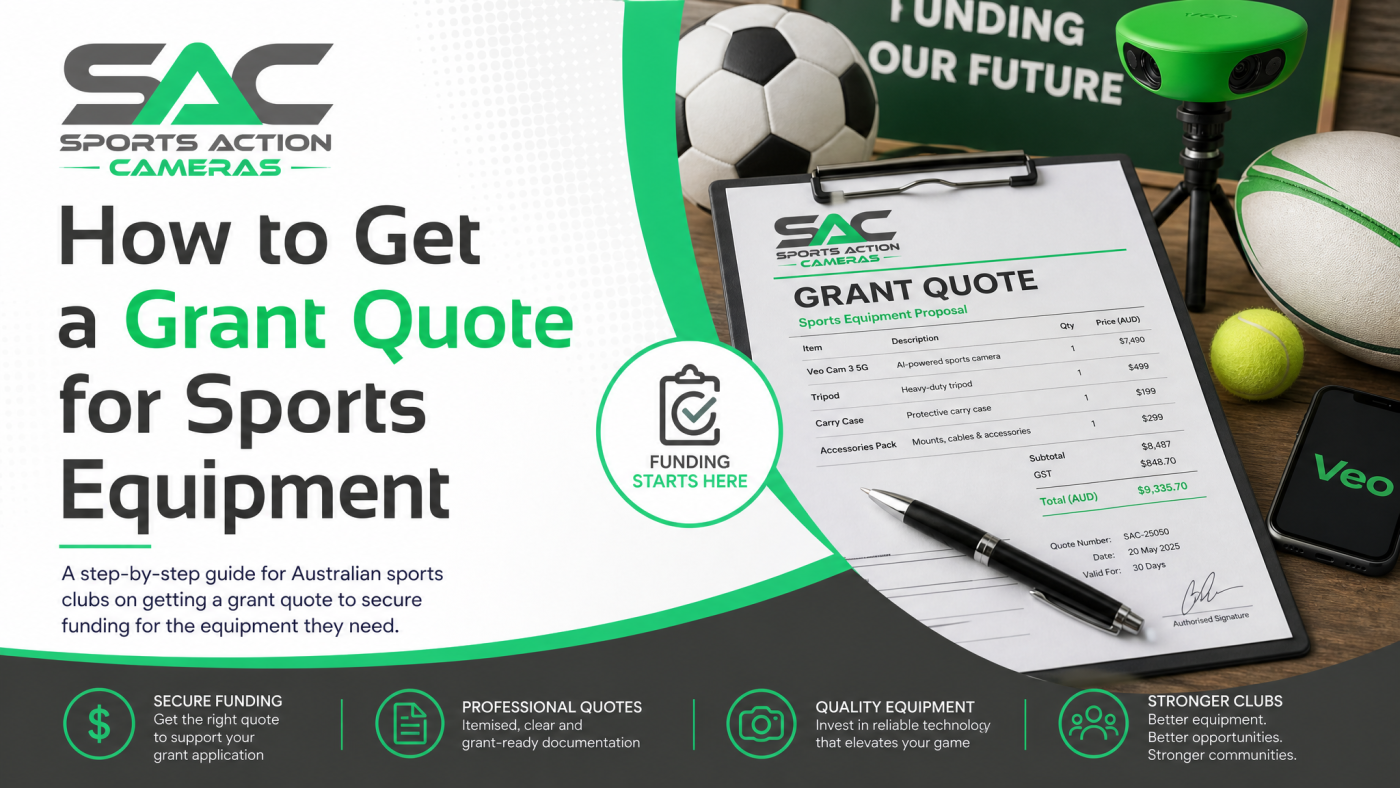
A strong grant quote for sports equipment does more than put a price beside a product. It shows a funding body that your club, school or association has selected a practical solution, understands the full cost and has a plan to turn the purchase into better coaching, player development and participation.
For teams looking to record matches and training, that usually means more than choosing a camera. The right quote needs to account for the recording setup, the equipment required to use it safely and effectively, and any ongoing platform costs. Get this right before you submit and your application is easier to assess, easier to defend at committee level and far less likely to stall when a funder asks for clarification.
What a grant-ready sports equipment quote should include
Funding programs vary, but assessors generally want a formal, itemised quote that clearly identifies the supplier, the goods being purchased and the total amount requested. A vague figure such as “sports camera package – $X” leaves too much unanswered. A well-built quote makes it simple to see what the organisation will receive.
For a Veo recording system, the quote should distinguish the camera model, such as Veo Cam 3 5G or WiFi, from the accessories that make it match-ready. A carbon fibre tripod, for example, is not an optional afterthought when the camera needs secure height and stable positioning on the sideline. A carry case, bag or mount may also be justified where it protects the equipment and supports reliable use across multiple teams or venues.
It should also state whether GST is included, provide a quote date and validity period, and show the supplier’s Australian business details. Those basics matter. Many grants have fixed assessment windows, and an expired quote can create unnecessary work when your application is otherwise ready to go.
Just as importantly, separate one-off hardware costs from recurring Veo subscription costs. The camera platform subscription is required for the Veo ecosystem and supports the analysis, sharing and other platform features your program may rely on. Being upfront about that ongoing commitment shows sound financial planning rather than creating a surprise after the grant funds have been spent.
Start with the outcome, not the camera
The strongest applications are not built around a shopping list. They begin with a sporting outcome and show why the equipment is the right response.
A community football club might need a consistent way for coaches to review team shape, set pieces and player decision-making after games. A school sport department may want equal access to match footage across several teams, rather than relying on a parent filming from the boundary when they can. A rugby or netball program may be focused on creating video feedback that helps athletes understand positioning, transitions and game awareness.
These are different cases, so they may need different packages. The core equipment can be similar, but the justification should reflect the program’s actual need. If your club is applying under a participation or inclusion category, explain how shared recording tools improve access across junior, girls’ or regional teams. If the funding focus is facility, equipment or performance development, connect the purchase directly to safer operations, coach education and measurable development opportunities.
Avoid claims you cannot support. You do not need to promise that a camera will win a premiership. You do need to show that your organisation will use the system regularly, that coaches have a clear purpose for footage and that the investment benefits more people than one senior side.
Choose a package that matches how your organisation operates
A lower upfront number is not always the best grant choice. If a package leaves out the tripod, protection or connectivity option your program needs, the club may have to find more money immediately after approval. That weakens the value of the grant and can delay deployment.
Start with the venue and match-day routine. Teams recording at grounds with suitable mobile coverage may prefer the flexibility of a 5G camera setup, particularly where livestreaming and quick access to footage are part of the plan. WiFi may suit organisations with dependable venue connectivity or a different workflow. The best option depends on your location, the way coaches review footage and whether matches are played across several grounds.
Then consider usage. One camera shared across a school’s football, hockey and rugby programs needs a durable transport and storage solution. A club running several grades on the same day needs clear booking and handover processes. If a staff member or volunteer will set up equipment, prioritise a package that is straightforward to deploy consistently. Great footage starts with a camera placed correctly, at the right height, every time.
Sports Action Cameras Australia can help organisations shape a quote around the Veo Cam 3 ecosystem rather than simply supplying a box. That is valuable when your committee needs to compare options, understand the subscription requirement and purchase from Brisbane-held Australian stock with local support available after delivery.
How to request a grant quote for sports equipment
Give the supplier enough detail to prepare a quote that fits the application, not just a generic product price. State the sport or sports involved, the number of teams expected to use the system, the grant program if one has been identified, and whether your organisation is considering 5G or WiFi.
It also helps to explain your intended use: match recording, training review, player highlights, livestreaming or a combination. This creates a clearer basis for recommended accessories and reduces the chance of submitting a quote that misses a practical requirement.
Before lodging the application, check that the organisation name on the quote matches the legal entity applying for funding. This can be different from the name used on jerseys or social media. Confirm the delivery address, contact person and whether the grant rules require multiple quotes. Some programs require competitive quotes above a certain value, while others accept a single specialist quote where the product has a specific capability. Read the program guidelines rather than guessing.
If co-contribution is required, make the split unmistakable. Show the total project cost, the grant amount being sought and the club contribution. If the subscription will be paid from annual operating funds, say so in your budget notes. A funder wants confidence that the equipment will remain useful beyond the first season.
Build the case around access and repeat use
A recording system earns its place in a grant application when it becomes part of the program, not a novelty wheeled out for finals. Describe who will use it, when they will use it and how the organisation will manage access.
For example, a club could nominate a video coordinator or coaching lead to manage bookings, equipment sign-out and basic setup guidance. Coaches might commit to one review session each fortnight during the season, with selected clips used for player education. A school could create a shared timetable so multiple sports access the same system across terms.
Where appropriate, quantify the reach. State the number of teams, registered players, coaches and volunteers likely to benefit. Include the indirect value as well: a single recording can support coach development, assist officials’ education, give families a way to follow a match and provide footage for player feedback. Keep the figures realistic and tied to your actual program.
This is also where local purchasing can strengthen the case. For time-sensitive grants or a season approaching quickly, Australian availability, clear warranty pathways and accessible support reduce the risk of equipment arriving late or being difficult to set up. A funder is investing in delivery, not just purchase.
Common mistakes that weaken a quote
The first is treating the quote as the whole application. The quote proves cost, but your narrative must prove need, benefit and readiness. Pair it with a concise explanation of the problem your program is solving.
The second is omitting ongoing costs. If your organisation needs a subscription to use the platform, include that fact in the budget planning. It does not necessarily mean the grant must fund every future year, but the committee should know who will carry the cost after the initial funding period.
The third is requesting equipment without assigning responsibility. Cameras, tripods and accessories need secure storage, a simple setup process and a nominated person who can help coaches get started. A basic implementation plan makes the investment more credible.
Finally, do not wait until the final day of a grant round to request documentation. Allow time to review the package, check eligibility rules and obtain committee approval. The best applications are rarely rushed.
When the grant is approved
Move quickly, but follow the grant conditions before ordering. Some programs require written approval, supplier confirmation or evidence of payment before funds are released. Keep the approved quote, invoice, payment records and any required photos or reports together from day one.
Then make the first session count. Set up the recording system before a key fixture, test the workflow at training and show coaches how footage will feed into their review process. The real value is not simply recording every game. It is giving players clearer feedback, giving coaches stronger evidence and giving your organisation a tool it will use week after week. This is your season – make the investment part of how your teams improve.