

Veo Camera
Choosing a Sports Highlights Camera System
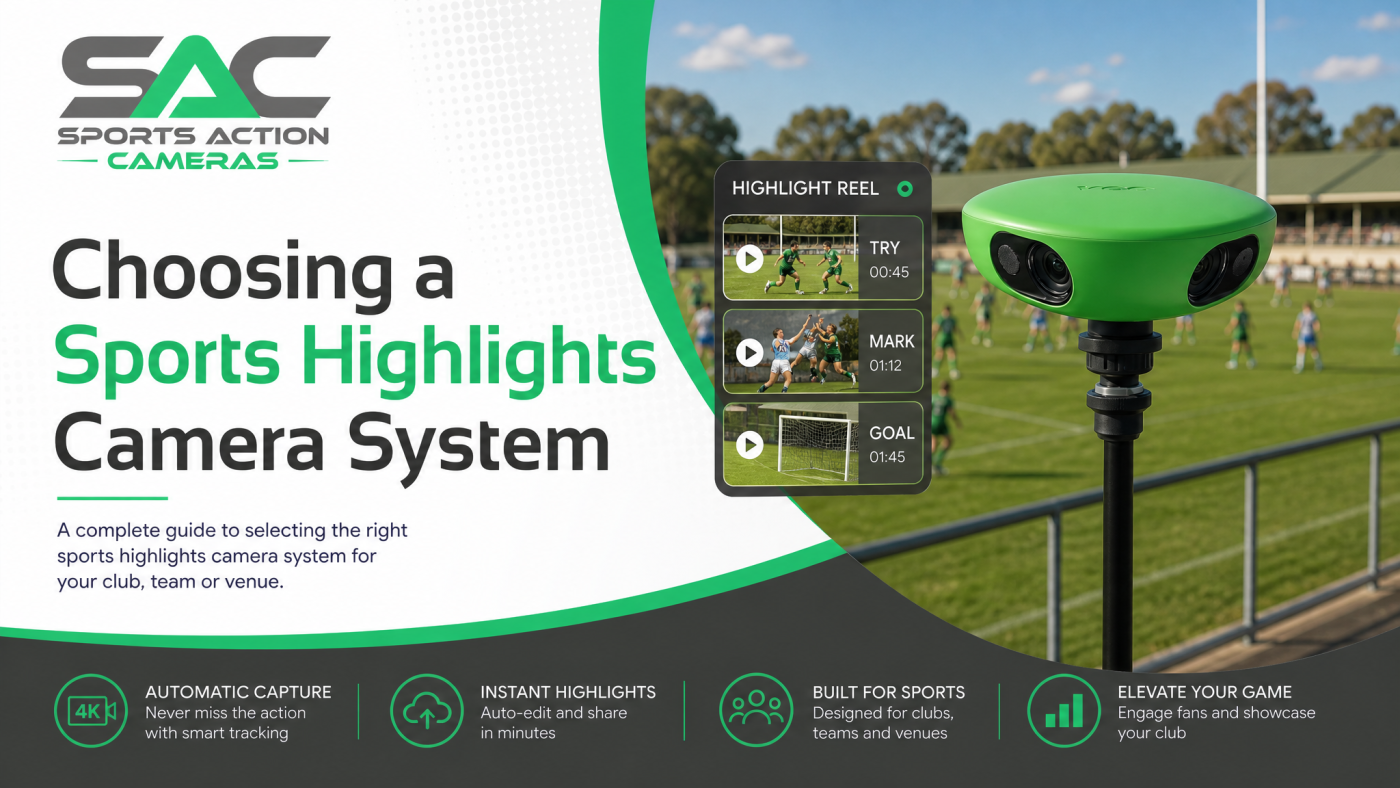
A close match finishes, the coach is packing cones, and three parents are already asking where they can find the goal, try or intercept that changed the game. A sports highlights camera system turns that moment into something useful. Instead of relying on shaky sideline mobile footage or someone remembering to press record, your club has a repeatable way to capture the full performance and turn key moments into shareable clips.
For Australian clubs, schools and performance programmes, that is about more than social media. Good footage supports better coaching conversations, player development, recruitment, team communication and a more professional game-day experience. The right system should remove work from volunteers, not create another technical job for them.
What a sports highlights camera system should deliver
At its best, a sports-specific camera records the whole field or court from an elevated position, then uses AI to follow play and make footage easier to review. Coaches can watch the match back without manually operating a camera for every minute. Players can revisit decisions, positioning and effort. Administrators can produce a strong highlight package without spending hours hunting through raw video.
That combination matters because most teams do not have a dedicated videographer. A coach may be running the bench. A team manager may be organising jerseys, scoresheets and transport. Parents are there to support their kids, not to stare at a screen for 80 minutes. Automation gives the club a practical pathway to consistent footage.
A capable system should help you record full matches and training, identify or create highlights, share video with the right people and support analysis through a subscription platform. It should also be designed for the reality of Australian sport: bright sun, windy ovals, wet sidelines, early starts and a busy season where the camera needs to work week after week.
Why full-match footage creates better highlights
A short reel has impact, but it only tells part of the story. The real coaching value starts with the full match. A goal might be the final touch in a sequence that began with a defensive turnover, an effective press or a smart off-ball run. A try may be set up by three strong tackles and a well-timed kick chase.
When your sports highlights camera system records the entire contest, coaches can review the cause as well as the outcome. That makes feedback more specific. Rather than telling a player to “work harder in defence”, a coach can show the moment a line lost its shape and explain what should happen next time.
For players, highlights become more meaningful too. A forward can build clips that show work rate, link play and defensive pressure, not just finishing. A netballer can capture leads, space creation and turnovers. A basketball player can show court vision and recovery defence alongside scoring. The strongest player profiles show contribution, not only the scoreboard.
Match the setup to your sport and venue
There is no single camera position that suits every venue. Field sports such as AFL, football, rugby league, rugby union, hockey and touch football generally benefit from a high, central viewpoint that can see play develop across a large area. Court sports, including netball, basketball, volleyball and futsal, need a position that captures both ends while keeping players visible around the action.
Height is one of the biggest factors. A carbon fibre tripod gives the camera the elevated angle required to see formations, passing lanes and team shape. It also keeps the kit portable enough for clubs moving between grounds. On windy days or uneven surfaces, correct setup and secure positioning are essential. A premium camera is only as useful as the view it can see.
Before buying, consider whether your team plays at one home venue or travels every week. Think about access to a suitable filming position, whether the facility permits tripod use, and how much gear volunteers can realistically carry. A compact, purpose-built setup is often a better long-term choice than a complicated arrangement that stays in a cupboard after two rounds.
Recording conditions are part of the buying decision
Mobile coverage, WiFi access and venue rules can affect how your workflow operates. Some clubs want fast uploading and livestream capability where connectivity allows. Others prioritise reliable recording first, then upload footage later. Both approaches can work, provided the club understands the plan before match day.
A WiFi camera may suit venues with dependable network access and a straightforward upload routine. A 5G-capable option can be valuable for organisations that need greater flexibility across different grounds. The best choice depends on your location, data arrangements, competition requirements and how quickly your staff want footage available after the final whistle.
The workflow that keeps volunteers onside
The technology should serve the team, not the other way around. Establish a simple routine: charge the camera, pack the tripod and protective case, set up early, start recording, then pack down after the game. Assign responsibility to a manager, assistant coach or rotating volunteer so one person is not carrying the job all season.
After the match, decide who reviews footage and how it will be shared. For many teams, the coach reviews key moments before the next session and sends selected clips to players. For representative programmes and schools, performance staff may create tagged playlists around set pieces, transitions or individual development goals.
Keep access controlled. Junior sport requires extra care around consent, privacy and distribution. Set clear club rules on who can view footage, who can download clips and where highlights can be published. A good system makes sharing easier, but the organisation still needs sensible boundaries.
Budget for the platform, not just the camera
One of the most common buying mistakes is treating sports recording as a one-off hardware purchase. The camera is the on-field tool, while the platform subscription provides the services that make footage useful – including storage, AI processing, analysis features and sharing options.
That ongoing cost should be part of the club’s annual budget from day one. It is not a hidden extra if it has been explained clearly; it is part of the operating model. Compare the subscription level against how many teams will use the system, how often you record and whether features such as livestreaming or advanced analysis are important to your programme.
For a small grassroots side, one camera shared across age groups may be the right starting point. For a large school or multi-team club, a broader rollout may deliver better value because the same workflow can support several squads. Grant applications and committee proposals are stronger when they explain these outcomes in practical terms: more coaching evidence, better player engagement, greater visibility and less reliance on volunteers filming manually.
Why local support changes the experience
A sports camera system becomes most valuable on the Saturday morning when something is not going to plan. You need clear advice on setup, accessories, subscription requirements and support pathways, not an international support queue and uncertainty around replacement equipment.
Buying from an Australian authorised specialist also helps clubs choose the right bundle from the start. That may include the correct camera model, a stable carbon fibre tripod, protective transport options and accessories suited to your venue. It reduces the risk of ordering mismatched gear and discovering the gap when the season has already started.
Sports Action Cameras Australia provides locally available Veo Cam 3 equipment, with stock dispatched from Brisbane and support for clubs that need purchasing guidance or grant-ready quotes. For time-poor administrators, that local pathway can be as valuable as the camera itself.
Start with the moments you want to improve
The best reason to introduce video is not simply that other clubs are doing it. Start with a clear performance question. Do you want to improve defensive structure? Help juniors understand positioning? Build athlete highlight packages? Review set plays? Give families a better connection to game day?
Once the goal is clear, the right recording setup becomes easier to choose and easier to justify. Record every game with purpose, review what matters, and let the next training session begin with evidence rather than guesswork. This is your season – make sure your team can see it.