

Veo Camera
Best record training sessions camera setup
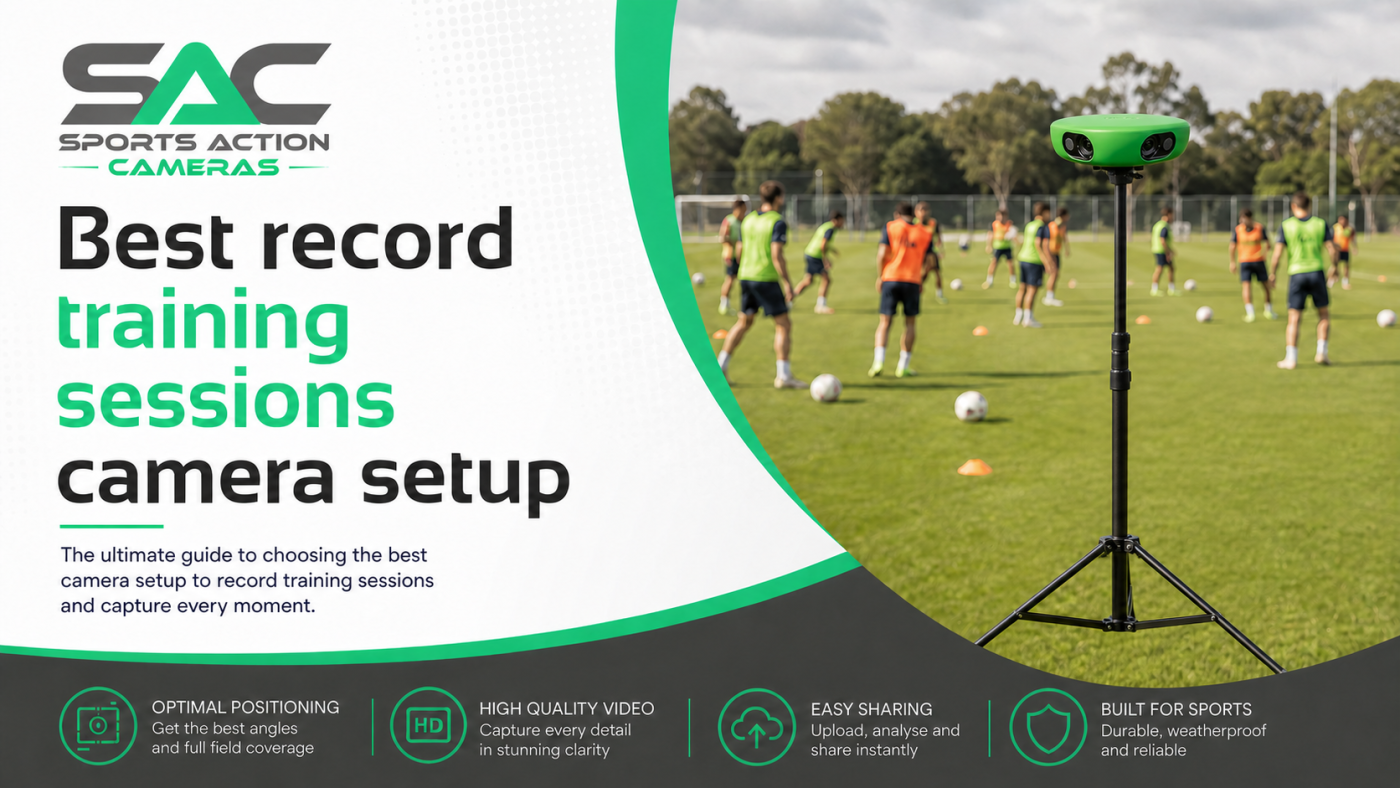
You do not need more guesswork at training. You need clear footage, every rep, every shape change, every transition, without asking an assistant coach to stand on the sideline holding a phone for 90 minutes. If you want a reliable record training sessions camera setup, the goal is simple – capture the full session properly, make review easy, and avoid a system that creates more work than it saves.
For most Australian clubs, schools and performance staff, that means thinking beyond image quality alone. Training footage only becomes useful when it is consistent, wide enough to show structure, simple to set up, and practical for the people actually running the session. A flashy camera spec sheet means very little if the footage misses half the drill, the battery dies, or the files sit untouched because the process is too clunky.
What a record training sessions camera really needs to do
Training is different from match day. Sessions are less predictable, drills move quickly, and the coaching value often sits in team spacing, work rate, decision-making and repeat patterns rather than one highlight moment. That changes what matters in your camera setup.
First, you need enough height and field of view to see the whole activity area. If the camera is too low, players block each other and shape is lost. If the framing is too tight, your feedback becomes limited to whoever happened to be nearest the lens. Coaches reviewing a build-up pattern, defensive line movement or centre-court rotation need context, not fragments.
Second, setup time matters. Training starts fast. If your staff need ten minutes to mount gear, level angles, manage cables and double-check recording, that friction adds up over a season. The best systems are the ones that get used consistently because they fit real club environments.
Third, the footage has to lead somewhere. Recording sessions is not just about archiving drills. It is about player development, coach review, selection support, parent communication, and in some cases building highlight material or educational clips for the wider programme.
Why fixed team-sport cameras suit training better
A general-purpose camera can record training, but that does not automatically make it a good fit for team sport. The better option for many clubs is a sports-specific system designed to capture the whole field or court from an elevated position, with AI-powered tracking and a workflow that supports analysis and sharing.
That is where the Veo ecosystem makes sense for training environments. It is built around the reality of team sport, not casual filming. Instead of assigning someone to pan and zoom manually, the system is designed to record from a static elevated position and produce usable team footage with less hands-on involvement.
For schools, academies and clubs running multiple sessions each week, that matters. It reduces staffing pressure, keeps the focus on coaching, and helps create a repeatable standard across different teams and age groups. One week of good footage is useful. A full season of consistent footage is where the value really shows.
Choosing the right record training sessions camera setup
There is no single answer that fits every sport. A football club training on a full pitch has different needs from a netball programme, a futsal centre or a rugby school with shared grounds. Still, the best setups usually come down to four factors – sport size, session length, upload method and support requirements.
Full field versus court-based sessions
On large outdoor fields, camera height becomes critical. A proper tripod is not an accessory you tack on at the end. It is part of the recording system. Carbon fibre tripods are especially useful for clubs that move gear between grounds because they balance strength with portability. You want stable elevation without dragging around something awkward and heavy.
For court sports and smaller-sided training, the key is often placement rather than maximum height. You still need a clear elevated view, but the environment may include indoor lighting, roof structures, tighter boundaries or limited space behind the baseline. A camera system built for sports use gives you far better practical flexibility than trying to improvise with consumer gear.
WiFi or 5G depends on your venue
This is one of the biggest buying decisions and one of the easiest to get wrong. If your training venue has dependable connectivity and your workflow suits WiFi-based uploading, that can be a solid option. If you operate across multiple grounds, regional venues or school campuses with inconsistent access, 5G can make life much easier.
It depends on how often you record, how quickly you want footage available, and whether your staff can rely on the same setup every session. Coaches and administrators usually do not want to troubleshoot network issues after dark on a wet Tuesday. They want footage captured and handled with minimal fuss.
Accessories are not optional if you want consistency
A camera alone is rarely the full answer. Cases, mounts, bags and transport-friendly storage all affect whether the system survives regular use and whether staff actually take it to sessions. The difference between a tidy, repeatable kit and a loose collection of gear in the back of a ute is bigger than it sounds.
If your goal is dependable training capture, buy the setup as a working system. That means the right camera, the right tripod, and the right carry and protection gear for your environment.
The hidden cost of the wrong setup
Clubs often focus on the purchase price first, which is understandable. But the bigger cost usually comes later – missed footage, wasted staff time, patchy adoption, and a system that only one person knows how to operate.
A poor record training sessions camera solution tends to fail in familiar ways. The footage angle is inconsistent. Charging and transport become messy. Subscription requirements were not understood upfront. No one knows who is responsible for setup. Support is hard to access when something goes wrong.
That is why local guidance matters. Buying the right kit from the start is not just about convenience. It can save a season of frustration. For Australian clubs and schools, working with a specialist that understands the Veo Cam 3 ecosystem, the subscription requirement, compatible accessories and practical deployment across local sport makes the purchase process far more straightforward.
How training footage helps coaches immediately
The strongest reason to invest in recording is not technology for its own sake. It is what coaches can do with the footage the very next day.
A football coach can check whether the back four stayed connected during transition games. A rugby programme can review spacing and support lines in conditioned drills. A netball coach can revisit timing and movement around the circle edge. A basketball staff group can assess defensive communication and close-out habits without relying on memory.
Players also respond differently when they can see the session rather than hear a recap. Good footage shortens the gap between instruction and understanding. It can support individual review, reinforce standards across squads, and create more accountability in high-performance environments.
For schools, there is another layer. Training footage can support staff development, student-athlete feedback, and stronger communication with parents or programme leaders. It helps the sporting programme look organised, modern and serious about development.
What buyers should ask before committing
Before choosing any record training sessions camera, ask practical questions, not just technical ones. How long does setup take at your venue? Who is responsible for transport and charging? Do you need 5G or will WiFi be enough? Will the footage be used weekly, or only occasionally? Are you buying for one team, one school department, or a whole club structure?
Also ask what support looks like after purchase. That is where many buying decisions become clear. Hardware is only part of the equation. You also need confidence around warranty, local stock, replacement pathways, and getting answers quickly if something is unclear.
For Australian organisations, local supply can make a real difference. Fast delivery from Brisbane-based stock and support that understands local sporting conditions is more than a nice extra when the season is already underway.
The smart play for clubs and schools
The best camera setup is the one your staff will actually use every week. That usually means a sports-specific system, a stable elevated tripod, the right accessories, and a clear understanding of how footage gets recorded, uploaded and reviewed.
If your current method relies on a volunteer, a shaky handheld recording, or inconsistent phone footage, you are leaving coaching value on the table. A proper training camera setup gives you structure, repeatability and better decisions built on evidence rather than guesswork.
This is your season. Record the sessions that shape it, not just the games that finish it.