

Veo Camera
How to Film Netball Games Properly
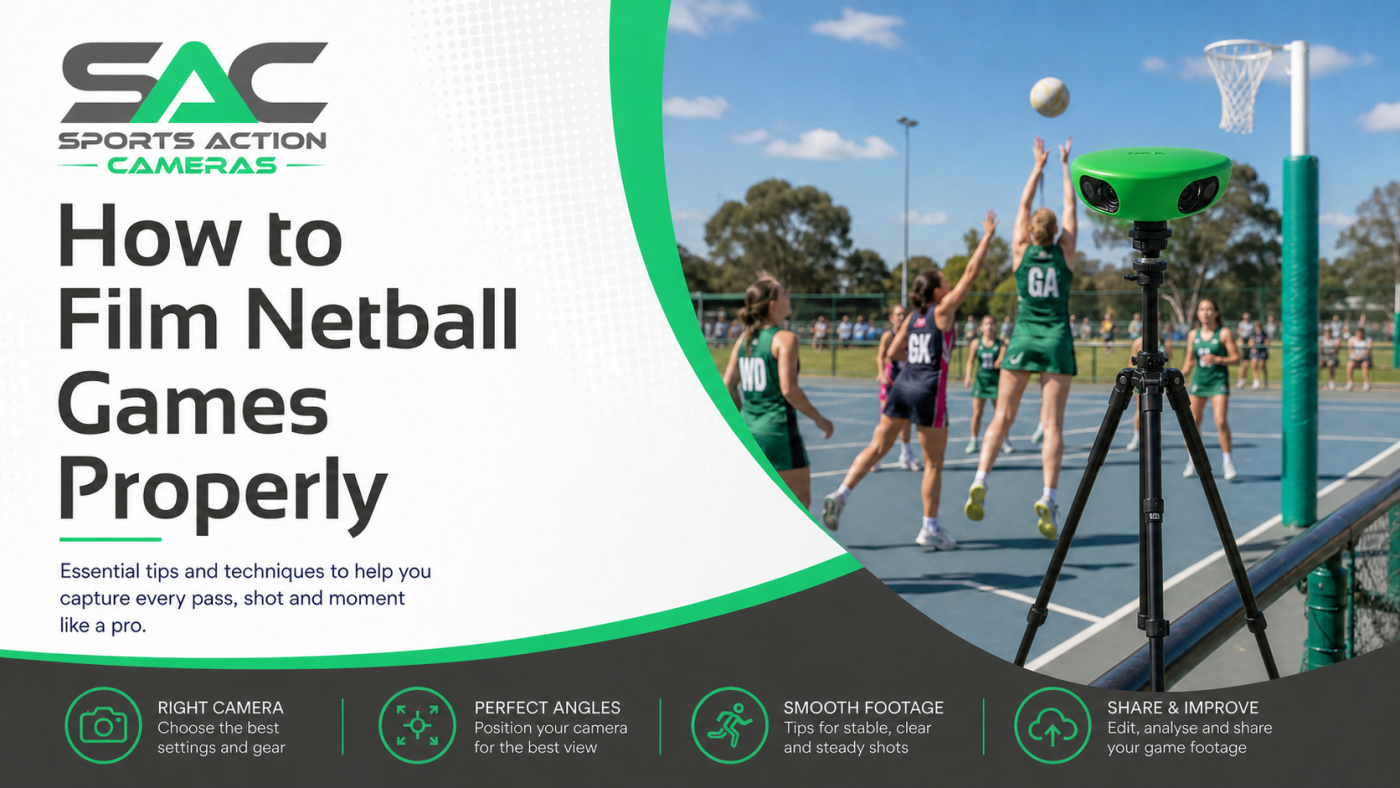
Miss the centre pass, lose the wing attack on a turnover, or end up with half the circle out of frame, and the footage is next to useless for coaching. If you want to know how to film netball games properly, the goal is not cinematic highlights. It is clear, reliable vision of every phase so coaches, players and schools can review movement, spacing, timing and decision-making without fighting the camera.
Netball is a fast court sport with constant transitions, tight spaces and frequent changes of direction. That makes it harder to film well than many people expect. A setup that works for a school assembly or a parent recording from the sideline often falls apart once the pace lifts and the ball starts moving end to end. Good netball footage comes down to three things – angle, height and consistency.
How to film netball games for useful analysis
The best netball footage shows the full shape of play, not just where the ball is. Coaches need to see the lead-up to passes, how defenders set up, whether attacking players are creating space, and what happens off the ball through the middle third. That means filming wide enough to capture team structure, while keeping the image clear enough to review individual choices.
For most clubs and schools, the strongest option is an elevated central position with a wide field of view. When the camera sits too low, players block each other and the far side of the court becomes difficult to read. When it sits too close to one attacking end, you get a poor view of transitions and miss the shape of the game through court.
A central, elevated setup gives you the best balance. You can follow both shooting circles, the centre third and the passing lanes in one continuous frame. That matters more than dramatic zoom. In netball, context wins.
The best camera position on a netball court
If you have access to raised seating, a balcony or a safe viewing platform at mid-court, use it. Height helps the camera see over bodies and gives coaches a cleaner view of spacing between lines. If there is no elevated platform, place the camera on a tall, stable tripod on the sideline as close to centre court as venue rules allow.
Avoid the temptation to set up behind a goal post. It can seem logical if you want to focus on scoring, but it creates a narrow view and makes it much harder to assess transitions, defensive recovery and movement through the centre third. For performance review, behind-the-post footage is usually too limited.
Outdoor courts bring another factor – sun position. If one end is staring into harsh afternoon light, image quality can drop fast. In that case, it is worth adjusting your angle slightly to reduce glare, even if the position is not perfectly central. A small compromise in symmetry is better than footage washed out by sun.
Height matters more than most people think
A low camera produces busy footage. Players screen each other, passes disappear behind bodies and the court feels cramped. Raise the camera and the game opens up. You see timing, channels and defensive shape much more clearly.
That is why a purpose-built sports setup matters. A solid carbon fibre tripod with enough height and stability is not an accessory for the sake of it. It is part of getting usable footage in wind, on uneven surfaces and across full match duration. Cheap tripods wobble, sag or shift, and once your framing goes, the review value drops with it.
Manual filming versus automated sports capture
If you are relying on one parent, volunteer or assistant coach to film by hand, there are trade-offs. A skilled operator can react to play and make adjustments, but manual filming depends heavily on consistency. If that person gets distracted, arrives late, zooms too much or follows only the ball, the footage becomes patchy.
Automated sports recording changes that equation. For clubs and schools trying to record every game, not just one or two feature matches, an AI-powered system is far more practical. It removes the need to roster a camera operator each week and gives teams a repeatable setup that can be used for matches, training and player review.
That is where many Australian organisations are shifting their approach. Instead of hoping someone remembers to press record and pan smoothly for four quarters, they are investing in a fixed sports camera system built for full-court capture. It is faster to deploy, easier to repeat and far more realistic for busy staff.
What equipment do you actually need?
For netball, keep the kit focused. You need a camera designed for team sport coverage, a stable tall tripod, enough battery or power for the full fixture, and a carry solution that makes setup simple on game day. If you are filming multiple teams across a Saturday, setup speed matters almost as much as image quality.
It also helps to think beyond the camera itself. Storage, upload workflow and access to footage after the match all affect whether your recording process actually gets used. Plenty of teams film games, then leave the footage sitting untouched because the process is clunky. The right system should make it easy to capture, review and share vision with coaches and players.
For clubs looking for a dependable local pathway, Sports Action Cameras Australia focuses on complete Veo Cam 3 solutions with the accessories needed to get teams recording properly, backed by Australian stock and support. That matters when you are buying for a school or sporting organisation and cannot afford guesswork with setup, warranty or delivery timing.
Indoor and outdoor netball need slightly different planning
Indoor netball usually gives you more predictable conditions, but venue restrictions can be tighter. You may have limited space behind courts, lower roofs, fixed lighting and less freedom around where tripods can be placed. Check sightline obstructions before game day, especially poles, railings and scorer benches.
Outdoor netball introduces wind, weather and stronger lighting changes. A stable tripod becomes more important, and so does checking your court orientation before the first whistle. If one sideline gets intense glare late in the afternoon, test your framing early rather than discovering the problem in the third quarter.
Common mistakes when filming netball
The biggest mistake is filming too tight. It feels natural to chase the ball, but netball analysis depends on seeing what happens around the contest. If the frame is too narrow, you lose drives into space, defensive switches and support options.
The second mistake is poor setup height. Too low and the footage becomes cluttered. Too far off-centre and the court shape becomes harder to read. Too close to one end and transitions lose context.
The third is inconsistency. Different camera positions each week make comparison difficult. If your 15 and under side is filmed from halfway one round and from the attacking third the next, coaches cannot review patterns in a meaningful way. Build one repeatable setup and stick to it.
Another common issue is forgetting the operational side. Was the battery full? Was the camera mounted securely? Was there enough time before the first pass to frame the court properly? Good filming is not just about the match itself. It starts with preparation.
A practical game-day workflow
Arrive early enough to set up without rushing. Position the tripod at centre court or as close as venue conditions allow. Raise it to maximise court visibility while keeping the system safe and stable. Check the full court is captured, especially both circles and the sidelines.
Run a quick test before players take the court. Review the framing, check for obstructions and confirm the recording session is ready to go. If you are filming back-to-back games, make sure your battery, data plan or upload process can keep pace with the schedule.
After the match, the value comes from what happens next. Coaches need footage they can access quickly, not a vague promise that someone will send a file later. If your system supports analysis, clipping and easy review, it becomes a coaching tool rather than just an archive.
Why better footage changes coaching outcomes
When netball is filmed properly, review sessions become sharper. Coaches can show exactly where a defensive unit lost shape, why a centre pass option closed down, or how a shooting circle rotated at the wrong moment. Players see the game more clearly because the camera has captured the full pattern, not just isolated moments.
That has practical value for schools, representative programs and clubs alike. It helps with player development, team communication, selection discussions and match preparation. It also lifts professionalism. If you are asking families, committees or school leadership to support a sports program, quality footage shows the program is organised and serious.
The best approach is the one your organisation will actually use every week. Start with a stable elevated setup, prioritise full-court visibility, and choose a recording system built for team sport rather than improvised filming. Record every game, make review easy, and the footage starts paying you back from the first round.