

Veo Camera
Do Sports Cameras Need Subscriptions?
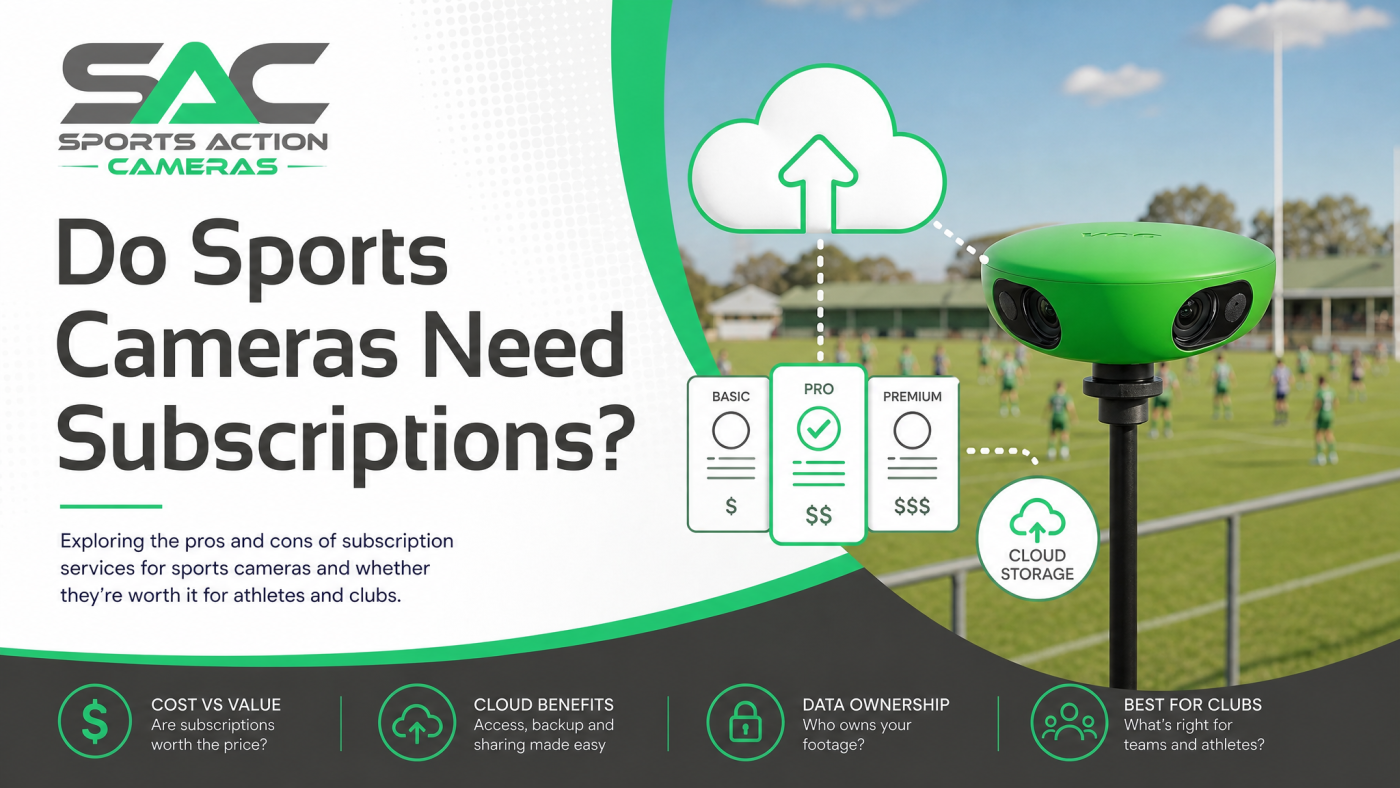
If you’re pricing up a camera system for your club or school, this question matters early: do sports cameras need subscriptions? The short answer is no, not all of them do – but many of the best team sports recording systems absolutely rely on a subscription to deliver the features buyers actually want, like AI tracking, cloud storage, match review, clipping, sharing and livestream tools.
That’s the part that catches some organisations off guard. They compare camera prices, assume the hardware is the whole cost, then realise later that the software platform is where the real workflow happens. If you’re recording matches for coaching, player development or content, that distinction matters a lot.
Do sports cameras need subscriptions for team sport use?
It depends on what you mean by “sports camera”. If you mean a basic camera that simply records video onto internal storage or a memory card, then no subscription is usually needed. You turn it on, record the game, transfer the files yourself, and handle the rest manually.
But if you mean a sports-specific system designed to film full matches with automation, cloud access and coaching tools, a subscription is often part of the product, not an optional extra. In that setup, the camera is only one piece of the solution. The subscription powers the platform that processes footage, follows play, stores matches, creates clips and makes review practical for busy coaches and staff.
For clubs, schools and sporting organisations, that can be a very good trade. You’re not just buying a lens on a tripod. You’re buying time back, cleaner workflows and a more usable review process across a season.
Why subscription models exist
A subscription can sound like a nuisance until you look at what it covers. In sports recording, ongoing costs often support cloud processing, AI tracking, video hosting, team access, platform updates and service improvements. Those aren’t one-off features.
Take team sport recording as an example. If the system is automatically following the game, processing footage after upload and making it available for analysis, that requires infrastructure behind the scenes. The manufacturer isn’t simply selling hardware and walking away. They’re running an ongoing software service.
That matters even more in school and club environments where one person might be juggling coaching, admin, team comms and parent expectations all at once. Manual video handling can become a weekly headache. A subscription-based platform often exists to remove that friction.
When a subscription is worth paying for
If your goal is just to keep a record of the occasional game, a subscription may be overkill. But for regular use, especially across a full season, the value becomes easier to justify.
A coach who wants to review team shape on Monday, clip key moments for training on Tuesday and share footage with players before the next round is using far more than a camera. They need a system that makes those jobs fast. The same applies to schools running multiple teams, or clubs trying to improve player development and presentation without adding more admin.
That’s where subscription-based sports camera platforms earn their place. They reduce setup friction, simplify access to footage and turn recording into something the program actually uses instead of something that sits on a hard drive and gets forgotten.
For performance staff, the time saving alone can be enough. For club committees, the consistency matters just as much. If multiple teams or coaches need access, cloud-based workflows are usually far more practical than passing files around on USB drives.
When a subscription feels like poor value
There are cases where paying ongoing fees doesn’t stack up. If your team records only a handful of matches each year, or if no one is realistically going to review, clip or share the footage, then a subscription can become dead money.
The same applies if your organisation expects the camera to work like a standard consumer device but isn’t prepared to use the platform features it was built around. In that case, you may end up paying for automation and cloud tools that never become part of your weekly routine.
This is why buyer clarity matters from day one. Before you commit, ask what problem the system is solving. Is it helping with coaching? Analysis? Recruitment? Livestreaming? Parent engagement? Sponsor visibility? If the answer is vague, the subscription will probably feel harder to defend.
The real buying question is total cost, not camera cost
A lot of buyers ask whether sports cameras need subscriptions because they’re trying to avoid surprise costs. That’s the right instinct. The better question, though, is what the total operating cost looks like across the season or year.
A cheaper camera without a subscription can end up costing more in staff time, manual editing, file storage issues and inconsistent usage. On the other hand, a more advanced system with a required subscription may deliver better value if it gets used every week and actually supports coaching outcomes.
This is especially true for clubs and schools trying to justify spending to committees, business managers or grant programs. A camera purchase should be assessed like a sports program tool, not just a hardware purchase. If it improves review quality, lifts player development and helps present your organisation more professionally, the return is broader than the device itself.
What to check before you buy
Not all subscriptions are structured the same way, and this is where many buyers get caught. Some systems require a subscription for core functionality. Others allow recording without one but lock away useful tools behind a paid plan. Some may also vary by storage limits, user access or feature tiers.
Before purchasing, check whether the camera works without a subscription, what features are included if it does, and what stops working if the plan lapses. That last point matters. You don’t want to build your workflow around automated recording and analysis only to find the camera becomes far less useful without ongoing payment.
You should also ask how the platform fits your sport, your competition level and your staffing. A high-performance program may need clipping, analysis and easy sharing. A community club might care more about reliable full-game recording and straightforward access for coaches. The right subscription is the one that matches how your organisation actually operates.
Why this matters more for AI sports cameras
With AI-powered systems, subscriptions are often central to the experience. The intelligence behind tracking, processing and reviewing footage usually sits within the platform, not just inside the hardware. That means the subscription is doing heavy lifting.
For Australian clubs and schools looking at systems such as Veo, it’s best to treat the subscription as part of the package from the start, not as an add-on to think about later. That leads to better budgeting, better rollout and fewer nasty surprises once the camera arrives.
This is also where buying through a specialist reseller can save a lot of wasted time. You want clear answers on what’s required, what’s optional and what setup makes sense for your sport. If the goal is to record every game and actually use the footage, clarity beats guesswork every time.
So, do sports cameras need subscriptions?
Some don’t. Many serious team sports systems do. The answer comes down to whether you’re buying a basic recording device or a complete recording and analysis workflow.
If your organisation wants simple, occasional filming, you may be fine without one. If you want consistent match capture, AI tracking, cloud access, easier review and less admin pressure on staff, a subscription is often part of the cost of doing it properly.
That doesn’t make subscriptions good or bad on their own. It makes them something you should budget for with open eyes. The smart play is to judge the full solution by how well it supports your season, your staff and your players – because the best camera setup is the one your team will actually use week after week.