

Veo Camera
Best Camera for Filming Football Matches
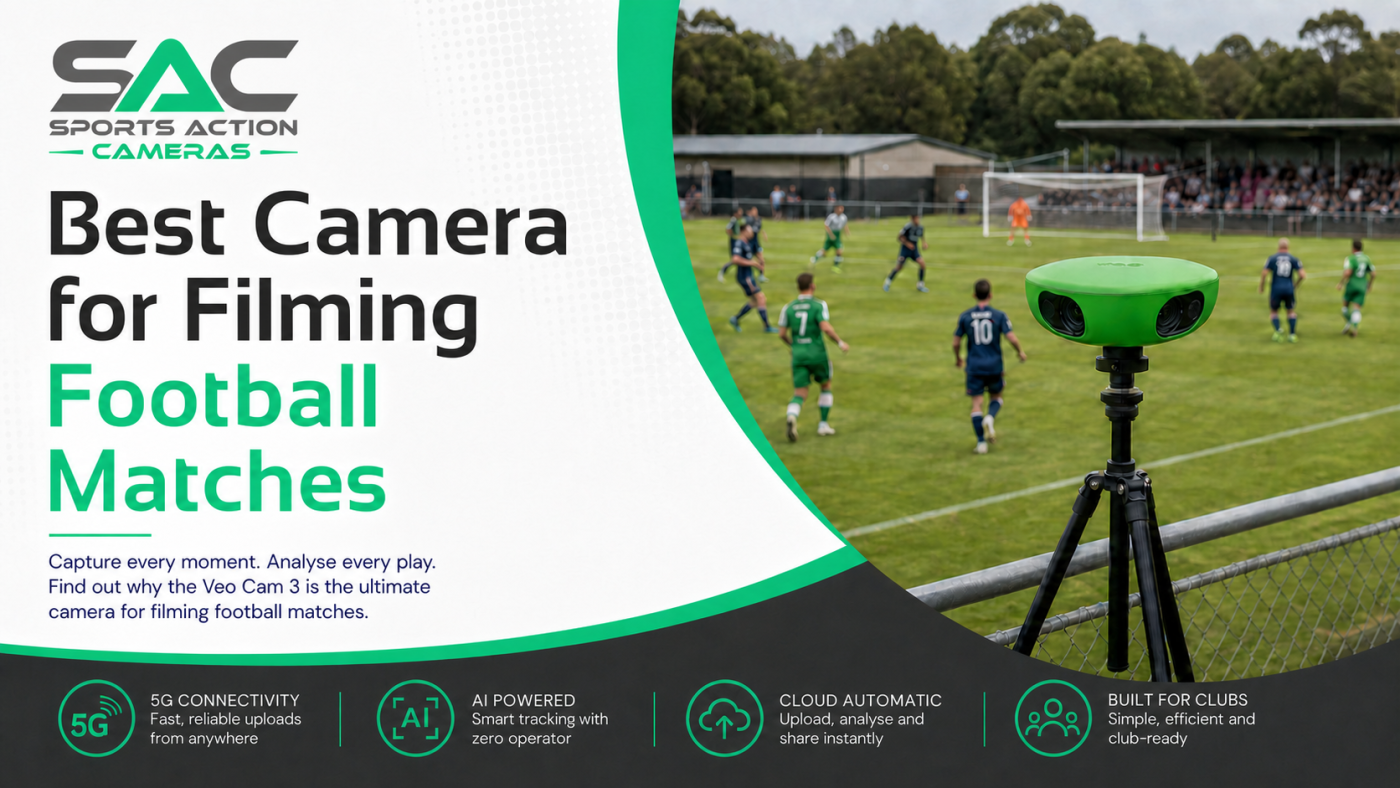
You know the problem by half-time. The camera operator misses a counterattack, the angle is too low to read team shape, and by Monday your coaches are trying to review a match from footage that tells only half the story. If you are searching for the best camera for filming football matches, you are not really shopping for a camera alone. You are buying consistency, better analysis, easier capture and a setup your club or school will actually use every week.
For football, the wrong camera creates work. The right one removes it. That matters whether you are recording senior NPL fixtures, school sport, junior development games or training blocks where coaches need a clear view of spacing, pressing triggers and movement off the ball.
What makes the best camera for filming football matches?
Football is one of the hardest sports to record well because the action spreads across a big area and changes direction quickly. A camera that looks fine for short-form content or sideline clips can fall apart over a full match. You need height, wide coverage and reliable tracking more than flashy specs on a box.
That is why a football camera should be judged on game-day performance, not just image quality. Can it capture the full pitch from an elevated position? Can it follow the ball and the shape around it without needing a dedicated operator? Can staff set it up quickly before kick-off and pack it down just as fast after the whistle? Those are the questions that matter to clubs and schools.
For most football environments, AI-powered auto-tracking has become the practical answer. It reduces the need to assign a volunteer or staff member to stand behind a camera for 90 minutes, and it gives coaches a broader tactical view than handheld filming usually delivers.
Why fixed wide-angle recording beats handheld filming
A lot of teams begin with a manual setup because it feels cheaper. In practice, it often costs more in time, missed footage and frustration. Handheld filming depends heavily on the person behind the camera. If they are inexperienced, distracted or stuck in a poor position, the footage suffers.
Football analysis needs a stable and elevated perspective. Coaches want to see back lines shifting, midfield spacing, wide runs and transition moments as they unfold. A sideline operator naturally follows the ball and can miss the context around it. That is useful for highlights, but less useful for real performance review.
A dedicated match-recording camera with AI tracking solves a lot of that. It captures the broader picture and keeps recording consistent across matches, which makes player development and team analysis far easier over the course of a season.
The strongest fit for football clubs and schools
If your goal is to record every game with less hassle and better tactical value, the Veo Cam 3 is the standout choice for most Australian football clubs, schools and academies. It is built around the needs of team sports rather than general-purpose content creation, and that distinction matters.
The biggest advantage is that it is designed to film matches from a high, wide position while automatically following play. That gives coaches a proper tactical view of the game without needing a dedicated camera operator. For football, where shape and movement matter as much as the ball itself, that is a genuine edge.
It also suits the real-world demands of clubs. Staff are busy. Volunteers change. Match days are crowded. A system that can be set up quickly, mounted securely on a quality tripod and used across multiple teams is far more valuable than one that demands a technically confident operator every week.
Best camera for filming football matches at different levels
The best choice does depend on your environment. A grassroots junior club has different needs from a high-performance academy or a school sport department managing multiple age groups.
For community football clubs, ease of use is usually the deciding factor. You want a camera that one person can transport, set up and trust to do the job. Footage needs to be clear enough for coaching, clips, parent engagement and occasional highlights. In this setting, reliability and simplicity usually beat chasing cinema-level image specs.
For schools, the buying decision is often broader. The camera may be used across football, futsal and other field or court sports. That makes a flexible, sports-specific system more attractive than a niche setup. Schools also value support, quote assistance and a clear purchasing pathway, especially when budgets require sign-off.
For performance programmes, analysis quality becomes more important. Coaches need dependable full-pitch footage, regular capture across training and matches, and a workflow that supports review. In these cases, the camera is part of a wider performance system, not just a recording tool.
What to look for before you buy
The first factor is coverage. Football is played across a large space, so your camera must hold the entire field effectively from an elevated angle. If you cannot see the width and depth of play, the footage loses value very quickly.
The second is tracking. Smooth, automated tracking is what separates a sports recording system from a standard camera setup. When the game swings from one end to the other, the camera needs to stay with it without constant human correction.
The third is setup practicality. Think about who will actually use it. If your team manager, coach or sports coordinator cannot get it ready in a few minutes, it will not be used consistently. The best systems are the ones that survive the realities of Saturday mornings, school fixtures and late venue access.
Then there is support. This is where many buyers get caught. A camera may look good online, but if it arrives with missing parts, unclear setup requirements or no local help, the season starts badly. For Australian organisations, local stock and support can save a lot of grief when deadlines are tight.
The subscription question matters
One thing decision-makers should be clear on is that a modern AI sports camera system is not just a one-off hardware purchase. In many cases, including the Veo platform, a subscription is part of the operating model. That should not be treated as a drawback, but it should be understood upfront.
Why? Because the value is not only in the camera body. It is in the software ecosystem that supports recording, processing, reviewing and sharing footage. If your club wants smarter analysis and easier access to match video, the platform side is part of the solution.
The key is buying with full clarity. Know what the hardware includes, what accessories are required, and what subscription level suits your use case. That is much better than trying to patch together a cheaper option that creates more work later.
Don’t overlook the accessories
A football camera is only as dependable as the setup around it. Tripod quality matters more than many buyers expect. You need proper elevation, stability in outdoor conditions and gear that can handle regular transport without becoming a weak point halfway through the season.
Cases, mounts and practical carry options also matter when a system is shared between teams or stored by schools and clubs. These are not add-ons for the sake of it. They protect the investment and make regular use far more likely.
This is where buying a sports-specific bundle often makes more sense than sourcing individual parts. It reduces guesswork and helps ensure the camera is ready for real match conditions from day one.
Why local supply changes the buying decision
For Australian clubs and schools, local supply is not just a convenience. It is risk reduction. If you are ordering before trials, pre-season or the opening rounds, waiting on overseas delivery can throw your plans off immediately.
Local stock, faster shipping and local support give buyers more confidence, especially when they need quotes, product advice or help choosing the right bundle. Sports Action Cameras Australia has positioned itself around that practical need, with Australian access to the Veo Cam 3 ecosystem, backed by local service and support pathways rather than guesswork from offshore sellers.
That matters when your camera is not a nice-to-have. It is part of how your club records games, reviews performance and presents itself professionally.
So, what is the right call?
If you want the best camera for filming football matches, start with the job the camera needs to do. For most Australian clubs, schools and football programmes, the answer is not a generic camera and not a manual filming setup that depends on whoever is free that day. It is a sports-specific system built to record the whole match with minimal effort and maximum coaching value.
That is why AI auto-tracking solutions have become the smart play. They save time, improve consistency and give teams better footage to work with across the season. For football in particular, where the shape of the game matters as much as the headline moments, that wider tactical view is hard to beat.
Choose the setup that your staff can use every week, that your coaches can trust on review day and that your club can support over the long run. Record every game properly now, and the benefits keep showing up long after full-time.